How to Choose the Right bedroom furniture for Your Room
Choosing the right bedroom furniture starts with understanding your room, your storage needs and the way you use the space. The best furniture arrangement balances comfort, functionality and style without making the bedroom feel crowded.
Whether you are furnishing a new home, updating a primary bedroom or creating a more practical guest room, begin with the bed and build the rest of the room around it. Consider the dimensions of each piece, how it will be used and whether it complements your existing furniture.
At Les Meubles Miracle, you can explore bedroom furniture in different styles and configurations. This guide explains how to select the right pieces, plan your layout and create a coordinated bedroom that works for your everyday needs.
What Are the Different Types of Bedroom Furniture?
Bedroom furniture includes the essential pieces used for sleeping, storage, dressing and organizing personal belongings. Each item serves a different purpose, so choosing the right combination is more important than simply filling the room.
1. Beds and bed frames

The bed is usually the largest piece of bedroom furniture and the main focal point of the room. Its size and design influence how much space remains for other furniture.
When selecting a bed, consider:
-
Mattress size and compatibility with the frame.
-
Overall bed dimensions, including the headboard and footboard.
-
Available space around the bed.
-
Whether built-in storage would be useful.
-
The material, finish and design of the frame.
A low-profile bed can suit a contemporary interior, while a taller headboard may create a more prominent focal point.
2. Nightstands and bedside tables

Nightstands provide convenient access to everyday essentials such as books, lamps, glasses and charging devices.
For a balanced arrangement, choose bedside tables that complement the bed's height and width. Matching nightstands create a coordinated appearance, while different designs can work when their proportions and finishes are compatible.
In a smaller bedroom, a narrow nightstand or floating shelf may provide useful bedside storage without taking up as much floor space.
3. Dressers and chests of drawers

Dressers and chests of drawers help organize folded clothing, accessories and personal belongings.
A dresser is generally wider and lower, making it useful for larger bedrooms with available wall space. A chest of drawers is taller and narrower, which can make it a practical option for rooms with limited floor space.
Before choosing either option, check the drawer dimensions, opening clearance and available wall space.
4. Wardrobes and other storage furniture

Wardrobes provide hanging and shelf storage for clothing, while additional cabinets can accommodate linens, accessories and other belongings.
If your bedroom has limited closet space, priorities furniture that provides the storage you actually need. Consider the depth of the unit, the way its doors open and whether it will obstruct other furniture.
How to Choose Bedroom Furniture According to Room Size
The right bedroom furniture should fit the available space while leaving enough room for comfortable movement.
Start by measuring the bedroom before selecting individual pieces.
Measure the room and its access points
Record the room's length and width, then identify doors, windows, closets, and other features that affect furniture placement.
Next, measure the complete outside dimensions of the furniture you are considering. A bed frame may be larger than its mattress, and a dresser requires additional space when its drawers are open.
Check the access route as well, including doorways, hallways, stairs, and elevators.
Choose furniture that suits the available space
|
Bedroom size |
Furniture considerations |
|
Small bedroom |
Compact bed, narrow nightstands and vertical storage |
|
Medium bedroom |
Bed, matching nightstands and a practical dresser |
|
Large bedroom |
Larger bed, additional storage and optional seating |
These are general planning suggestions rather than fixed room-size standards. The correct configuration depends on the actual dimensions of your furniture and bedroom.
Priorities essential pieces
In a smaller bedroom, begin with the bed and the storage you need most.
Avoid adding a dresser, chest and multiple cabinets if they serve the same purpose. A carefully selected combination of furniture can make the room easier to use while maintaining a more open appearance.
How to Match Beds, Nightstands, Dressers and Storage Furniture
A coordinated bedroom does not require every piece to look identical. The goal is to create a consistent appearance through complementary colors, finishes, materials and proportions.
Coordinate furniture finishes
Choose a dominant finish for the room, such as natural wood, walnut or a neutral painted surface. You can then introduce complementary finishes through the nightstands, dresser and other furniture.
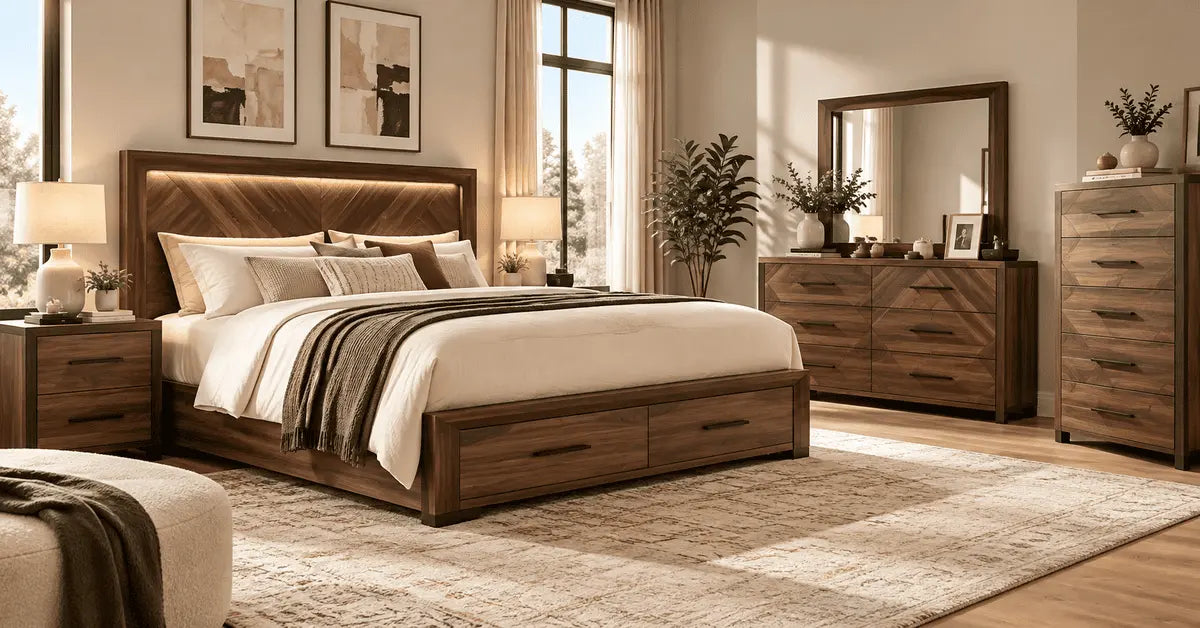
For example, a walnut bed can work with beige bedding, cream walls and darker decorative accents. A lighter wood finish can create a softer appearance when paired with white or neutral textiles.
Balance furniture proportions
The size of each piece should complement the bed and the available wall space.
A wide dresser may look balanced opposite a large bed, while a compact nightstand can be more practical beside a narrower frame.
Avoid placing several large furniture pieces close together if doing so makes the room feel crowded.
Match function as well as appearance
Matching furniture is most useful when the pieces meet your actual requirements.
Before choosing a coordinated arrangement, decide whether you need additional clothing storage, bedside drawers or a dedicated dressing area.
A visually consistent room is more practical when each piece also serves a clear purpose.
Modern Bedroom Furniture Styles and Materials
Modern bedroom furniture often features clean lines, simple shapes and restrained detailing. These characteristics can help create a calm interior without overwhelming the room.
Modern and contemporary designs
Modern and contemporary furniture can suit apartments, condos and bedrooms with a minimalist aesthetic.
Common design features include:
-
Straight lines and simple silhouettes.
-
Neutral finishes such as beige, white and natural wood.
-
Minimal decorative detailing.
-
Practical storage integrated into the furniture.
-
Complementary textures rather than excessive patterns.
A neutral bedroom can be refreshed through bedding, cushions and decorative accessories without replacing the main furniture.
Wood finishes
Wood finishes can introduce warmth and visual texture into a bedroom.
Lighter wood tones can complement white walls and neutral textiles, while darker finishes can create contrast against lighter bedding.
When combining different wood tones, consider their undertones and the overall balance of the room.
Upholstered furniture
Upholstered beds introduce fabric texture and can create a softer appearance than many exposed wood or metal frames.
Before choosing an upholstered bed, review the fabric, cleaning instructions, headboard construction and support system.
Material suitability depends on the product's construction and the way it will be used.
Bedroom Furniture Layout Ideas for Small and Large Rooms
A practical bedroom layout makes it easier to move around, access storage and use furniture comfortably.
The bed should generally be positioned first because it determines the placement of the other major pieces.
Layout for a small bedroom
In a compact room, place the bed where it allows the clearest walking route and preserves access to doors and closets.
Consider using:
-
A compact bed frame.
-
Narrow nightstands.
-
A chest of drawers instead of a wide dresser.
-
Wall-mounted shelves where suitable.
-
Furniture with built-in storage.
Keep the layout simple and avoid unnecessary furniture that reduces usable floor space.
Layout for a medium bedroom
A medium-sized bedroom may accommodate a bed, two nightstands and a dresser.
Position the bed as the focal point, then arrange the storage furniture around the remaining wall space.
Check that drawers and doors can open fully without blocking the main walking route.
Layout for a large bedroom
A larger bedroom can accommodate additional furniture, such as a chest of drawers, dressing table or accent chair.
However, a spacious room still benefits from a clear layout. Group furniture into functional areas rather than spreading individual pieces randomly across the room.
A well-planned arrangement should make the bedroom feel comfortable rather than empty or overcrowded.
Complete Bedroom Set vs Individual Furniture Pieces
A complete bedroom set and individually selected furniture can both work well. The better choice depends on your existing furniture, preferred style, and storage requirements.
|
Consideration |
Complete bedroom set |
Individual furniture |
|
Appearance |
Coordinated finishes and design |
More flexibility to mix styles |
|
Furniture selection |
Several pieces selected together |
Each piece chosen separately |
|
Storage |
Depends on the selected configuration |
Can be tailored to specific needs |
|
Existing furniture |
May include pieces you already own |
Easier to add only what is needed |
A complete set can simplify furnishing a room because the pieces are designed to work together.
Individual furniture may be more practical if you already own a suitable bed or dresser, or if your room requires a particular combination of storage pieces.
For a more detailed comparison of bedroom set configurations, sizes and storage options, read our bedroom set buying guide.
How to Choose Bedroom Furniture for Your Everyday Needs
The most useful bedroom furniture is furniture that supports your daily routine.
Before making a decision, consider the following:
-
Sleeping: Choose a bed frame that accommodates your mattress and fits the room.
-
Storage: Select drawers, wardrobes or cabinets based on what you need to organise.
-
Dressing: Consider whether you need a mirror, dressing table or additional storage.
-
Movement: Ensure furniture does not block doorways or create difficult walking routes.
-
Maintenance: Check the materials and care instructions for the furniture you select.
Avoid choosing furniture based on appearance alone. The most attractive arrangement may not be the most practical if it leaves insufficient space or does not meet your storage needs.
Bedroom Furniture Buying Checklist
Before purchasing bedroom furniture, confirm that:
-
The furniture dimensions fit your room.
-
The bed frame accommodates your mattress.
-
Doors and drawers have enough clearance.
-
The selected pieces provide the storage you need.
-
The furniture finishes complement one another.
-
The access route is suitable for delivery.
-
The product specifications and care instructions are clear.
These checks can help prevent common furniture-buying mistakes and make it easier to create a functional bedroom.
Final Thoughts
Choosing the right bedroom furniture involves more than selecting attractive pieces. Start with your room dimensions, identify your storage requirements and select furniture that supports your everyday routine.
A coordinated bedroom can be created with a complete set or a carefully selected combination of individual pieces. The right choice is the one that fits your space, complements your preferred style and provides the functionality you need.
Explore the available bedroom furniture at Les Meubles Miracle and choose pieces that work with your room and lifestyle.
Frequently Asked Questions
1. What furniture should every bedroom have?
Most bedrooms need a bed and suitable storage. Nightstands, dressers, wardrobes and other furniture can be added according to the room's size and the occupants' needs.
2. How do I choose bedroom furniture for a small room?
Measure the room, select appropriately sized furniture and priorities essential pieces. Compact nightstands and vertical storage can help make better use of limited space.
3. Should all bedroom furniture match?
No. Furniture can coordinate through complementary colors, materials and proportions without having identical finishes. A consistent color palette can help create a balanced appearance.
4. Is a complete bedroom set better than buying individual pieces?
A complete set can simplify furniture selection and create a coordinated look. Individual pieces may be more suitable if you already own furniture or need a specific combination of storage options.
5. What should I consider before buying a bed frame?
Check the mattress size, outside dimensions of the frame, available room space, support system and any storage requirements. Confirm the specifications of the exact model before purchasing.